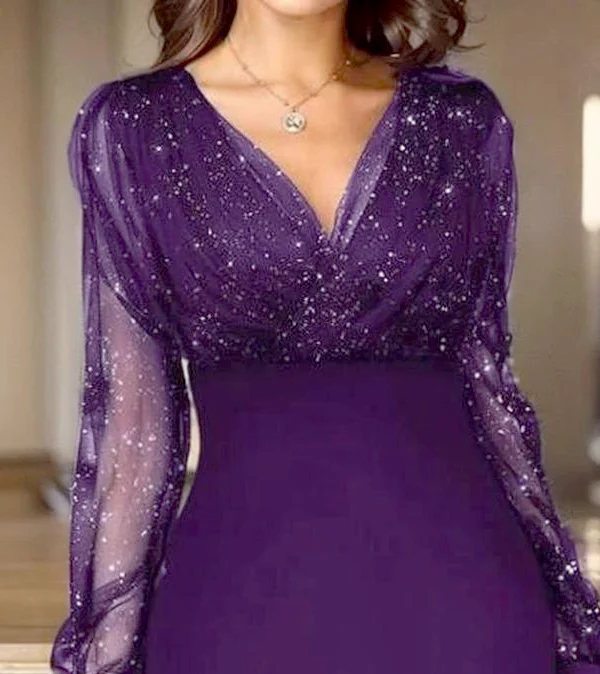
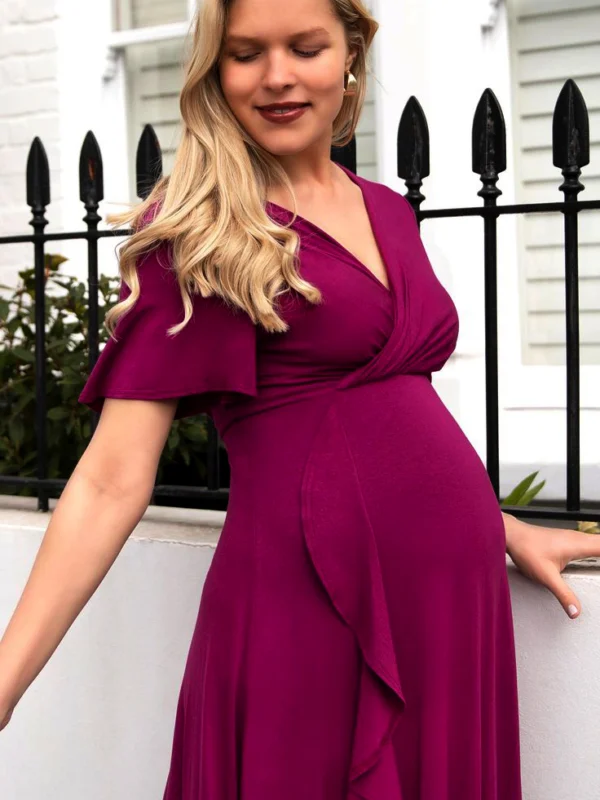
An evening dress with hip detail directs attention between bodice and skirt. A side bow creates a different shape from guided folds. A quieter area beside these options helps establish whether you want an accent there at all. The four references connect those possibilities with different necklines and skirt openings. Choose the visible feature you enjoy first. It needs neither a luxury label nor a claim about the garment’s value. What matters is how position, size and neighbouring lines work together in the outfit you actually wear.
Evening dress with hip detail: choose position and size separately
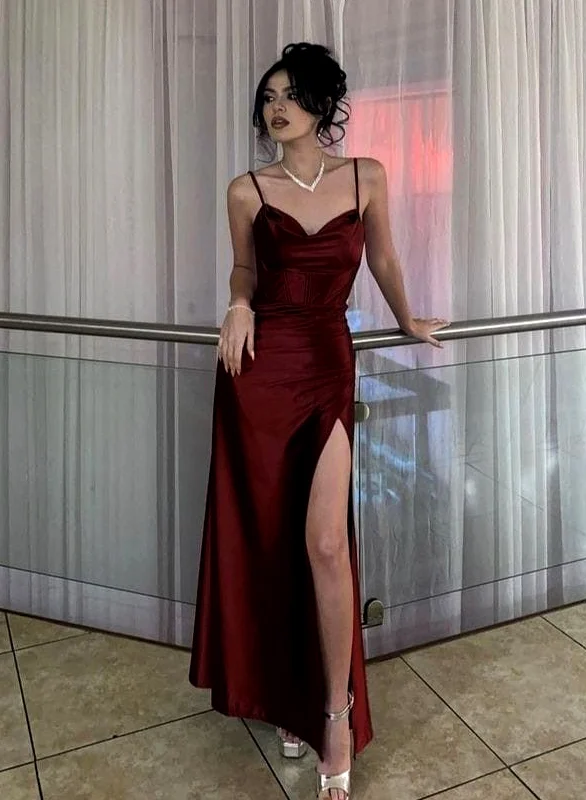
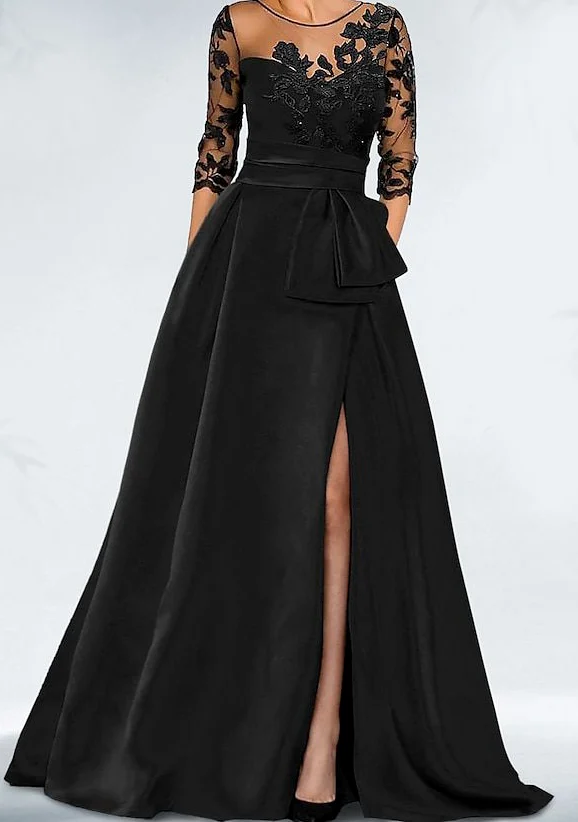
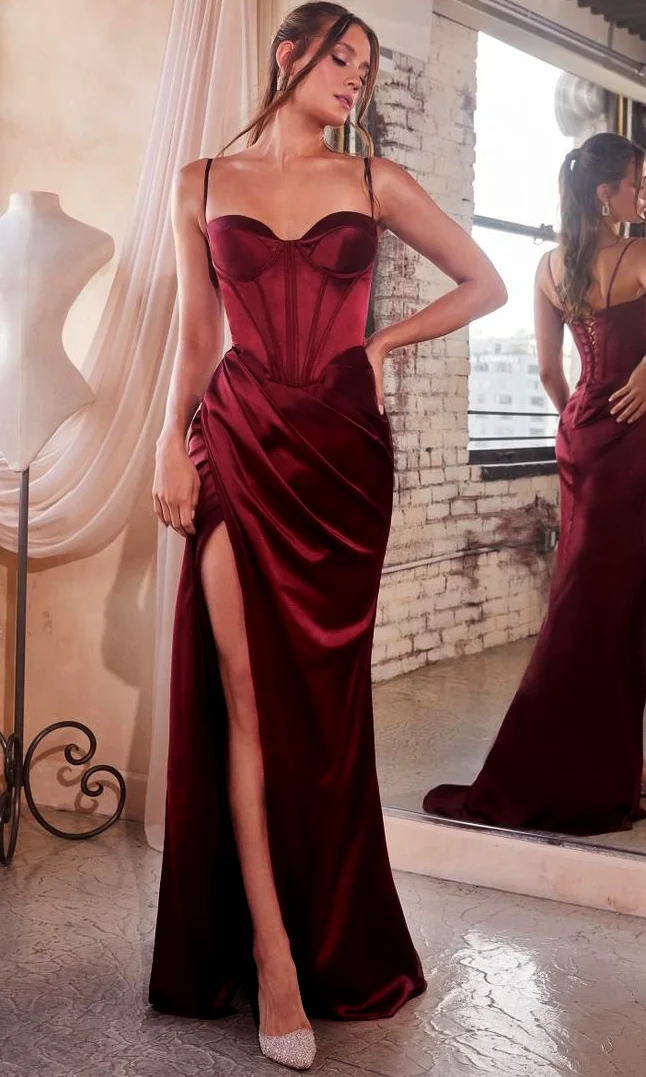
The black dress with patterned sleeves places a larger side bow near its defined middle. On the dark red version, folds travel from one side across the upper skirt. Both interrupt the lower area, but differently. The bow makes a more contained shape, while the draping continues several lines. Ask whether you want a definite side point or a direction moving across the surface. That decision can be made independently of black or red. Enjoying one colour does not require adopting every detail attached to it.
Compare height next. An accent directly beneath the bodice changes the transition differently from one lower down. Identify where the volume begins at the fitting. Do you enjoy that position with relaxed arms too? A hand on the hip can emphasise or partly conceal the area. Assess your favourite without that pose initially. You do not need a universal body-shape rule; the question concerns the arrangement you want to show. Include a side view so that the front photograph does not make the entire decision.
Compare a contained bow with continuing folds
A side bow has a definite outer edge. In the black reference, it sits beside the skirt while the front opening makes a longer vertical line. Try a comparable detail from the front and diagonally at the side. Check whether you enjoy the space between bow and arm. Ask about the actual attachment if you are considering a change. Its appearance cannot establish that the shape can be removed or moved anywhere you choose. Have the real available option explained on the garment.
Several shiny-looking folds run diagonally across the hip area of the red dress. They create a longer movement rather than one contained accent. Compare their direction with the neckline and vertical bodice lines. Do you want the change from straighter upper drawing to diagonal lower surface, or a more continuous direction? The satin evening dress guide adds comparisons of shine and draping. Establish the actual fabric description separately on the product; visible shine alone does not identify a fibre.
Use the quieter hip area as a real alternative
The strapless black dress has a clearer quiet middle over a broader skirt. An arm rests at the side and part of a hand disappears around the skirt area. For this comparison, the important distinction is that no similarly large side bow is visible there. Put this arrangement beside the more strongly drawn centre. You may want to retain that clearer transition and place detail at the neck or in a bag instead. A quieter area is a complete design possibility rather than missing decoration.
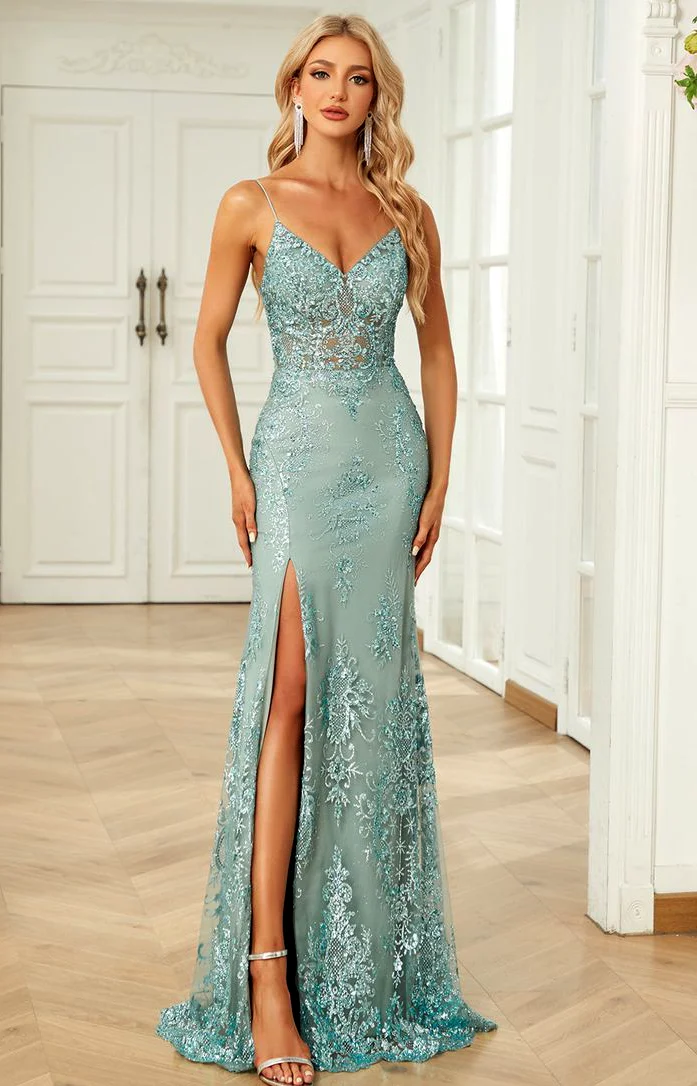
The pale blue long dress distributes motifs over bodice and skirt. Its hip outline stays closer to the body than the broadly falling black version. Compare the volume beside the body as well as decoration. If a finer pattern is the feature you enjoy, you need not also choose a larger bow. Hold similar shoes and a restrained bag beside two actual candidates first. This helps distinguish a change in surface from a change in width or added side detail. Then vary only the feature you want to investigate.
Choose the skirt opening separately
Several references have a leg opening whose position matters beside the hip area. On the black bow dress, a longer opening runs beneath the defined middle. On the red version, the side folds meet an open front skirt line. Treat them as separate questions: how should the hip be drawn, and where do you want the skirt area open? Enjoying the detail above does not oblige you to choose the same visible leg line below. Look for a real version that meets both preferences rather than inventing an available product from imagined changes.
Walk a few steps in the actual dress, turn and sit. Observe how opening and folds fall before rearranging them. Decide afterwards whether that matches your preferred coverage. A leg placed forwards in a photograph can reveal the opening more strongly than a neutral stance. Include your intended shoes too. A height change alters your actual stance and may justify assessing the hem again. The photograph does not prescribe a particular shoe model; your own pieces and ordinary movements make the useful comparison.
Arrange bag and bodice around the chosen accent
Hold your actual bag on the detail side, then on the other. Compare whether it hides the bow, interrupts a fold line or becomes a smaller area you enjoy beside it. A shoulder bag can sit somewhere else again. Choose through the real carrying position. Placing the bag on a table beside the dress cannot answer this question. With its necessary contents included, you can also establish how you will actually hold it during the evening. Look at the whole outfit after each change.
The black sleeved version already has a clearly drawn upper area, while the red dress has different bodice lines. Choose neck and ear jewellery after settling the hip accent. The jewellery with a statement dress guide helps assess the available spaces. You may emphasise one side and leave another quieter. Symmetrical distribution of every accessory is not a requirement for a deliberate outfit. Adding them individually reveals which detail genuinely supports the focus you selected.
Finish with a specific description of the detail
Describe your favourite precisely: contained bow near the middle, diagonal folds across the hip or a quiet area beside a patterned bodice. This remains useful when a new candidate has another colour. Ask about actual execution, composition and proposed alterations. An elaborate-looking photograph cannot establish a brand, particular handwork or price category. A style preference and verifiable product information should complement one another rather than being confused. You can enjoy the visible idea while still checking what is genuinely offered.
After a proposed adjustment, assess the same views again. A smaller bow may create another edge beside the arm; changed folds may affect the front opening. Inspect the complete dress with your companions. Read its own label; GINETEX explains care symbols. Your final choice is the detail whose form you enjoy and whose actual position you have checked standing, seated and with your bag. That selects your own wearable arrangement rather than merely a striking photographic pose.
Decide whether a bow or draping at the hip should be your focus. Compare a quieter area alongside it and test the detail with your actual bag and skirt opening.
Frequently asked questions
Must a hip detail be identical on both sides?
No. A side bow or draping can create deliberate asymmetry. Check front and side views before choosing its position.
Is a pictured bow automatically removable?
No. The picture shows its form rather than the complete attachment. Ask to see the actual connection on the offered dress.
How should I carry a bag beside the hip accent?
Compare your actual bag in each hand or its intended carrying position. Decide whether it should leave the detail clear or introduce another deliberate line.
Does a shiny surface establish greater value?
No. The photograph shows a light effect. Composition, actual execution and price need separate information about the offered product.